
West Indian Drywood Termites
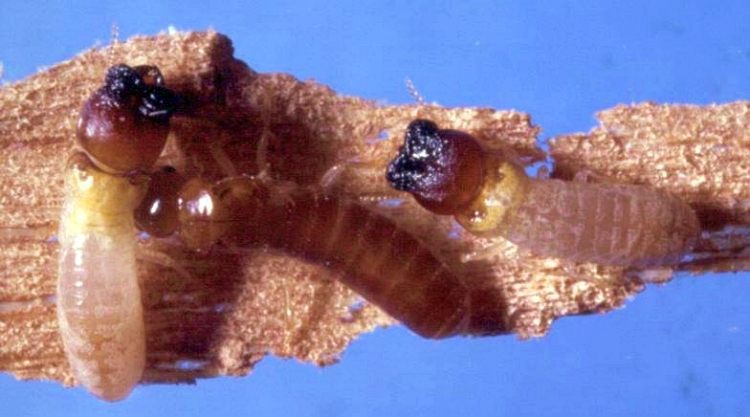
West Indian Drywood Termite (WIDT)
The West Indian Drywood Termite (Cryptotermes brevis) is an introduced pest and one of the most destructive threats to timber structures in Queensland. Unlike common subterranean termites, it requires no contact with soil or ground moisture — it lives entirely within the wood it infests, making it particularly difficult to detect and control.
Where Is It Found?
WIDT is established in Maryborough and many suburbs across Greater Brisbane, and has also been detected in Bundaberg, Townsville, and Rockhampton. All Queensland residents — particularly those in coastal areas — should be aware of its presence.
Why Is It So Dangerous?
WIDT colonies can survive in surprisingly small pieces of timber, such as a picture frame, and can live for over 10 years. They cause severe structural damage to homes, buildings, and wooden furniture by excavating galleries and tunnels within timber, weakening it from the inside out. Infestations can go unnoticed for five years or more, as colonies are typically hidden in concealed areas with few visible signs.
How to Spot It
The most common signs of a WIDT infestation include:
- Frass (termite droppings): Small, hexagonal pellets that may appear near skirting boards, under windowsills, or in the corners of rooms.
- Wings: Discarded wings found near windows or in corners, left behind after the winged termites (alates) land and shed them.
- Tiny ejection holes: Small holes around 1mm in diameter near frass piles in timber, though these are often sealed and hard to see.
Frass can resemble other debris, so if you’re unsure, a licensed pest professional can help confirm an infestation.
What Timber Is at Risk?
WIDT most commonly targets hoop pine, pine species, and cabinet timbers such as maple, red cedar, and silky oak. Damage is generally limited to construction timber and wooden furniture — paper and living trees are not affected.
What Should You Do?
- Inspect regularly. Have your property inspected by a licensed pest management technician on a routine basis.
- Report promptly. If you suspect a WIDT infestation, you are legally required to report it to Biosecurity Queensland within 24 hours by calling 13 25 23. Collect a sample of frass, wings, or soldier termites, or submit clear photographs.
- Don’t move infested items. Under the Biosecurity Act 2014, you must not move or dispose of infested timber, furniture, or structures without first having them treated and then wrapped or sealed.
- Get professional treatment. Contact a licensed pest management technician for treatment options. Structural fumigation (tent fumigation) is the most effective method, though spot treatments may be available in some cases. Always ask your technician to show their pest control licence with endorsements for timber pests.